Being a nurse means being a leader agree? In the Australian healthcare system, leadership and nursing go hand in hand. Within the broader paradigms of nursing and midwifery, students are expected to demonstrate leadership capabilities while building strong professional relationships.
Recognising this growing demand, Western Sydney University offers a dedicated unit titled Clinical Leadership and Professional Relationships (401213), designed to equip nursing students with essential leadership skills and relationship-based practice knowledge.
This unit explores both contemporary and traditional leadership styles that support compliance with nursing and midwifery standards. It also enables students to understand person-centred nursing practice and apply critical thinking in dynamic healthcare environments.
If you are currently studying this unit and struggling with assessments, our nursing assignment help professionals assist students with academic writing aligned to university expectations. This guide also includes a recently completed assignment sample that reflects the key concepts of the Clinical Leadership and Professional Relationships 401213 unit.
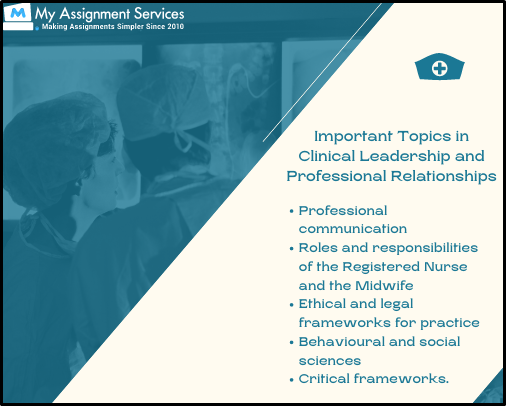
Understanding Relationship-Based Culture in Nursing
Before analysing leadership theories, it is essential to understand the concept of relationship-based culture in nursing. This framework emphasises meaningful interactions between nurses, patients, and healthcare teams to enhance care delivery and professional practice.
Students working on Clinical Leadership and Professional Relationships 401213 assignments often find this concept challenging. Our Western Sydney University assignment help experts frequently guide students through this foundational topic.
Key Elements of Professional Relationships in Nursing
To establish effective professional relationships, nurses must consistently demonstrate the following elements:
- Attuning
- Wondering
- Following
- Holding
Healthy professional relationships are developed when nurses attune to others’ needs, remain curious and empathetic, respond appropriately to cues, and maintain dignity and mutual respect in all interactions.
Five Principles of Relationship-Based Nursing Culture
Leadership becomes evident when nurses apply relationship-based principles in real-world practice. Understanding these principles allows students to link leadership behaviour with quality patient outcomes.
Core Principles Explained
- Healing culture
- Loving leadership
- Teamwork
- Interprofessional practice
- Care delivery
These principles highlight how leadership influences teamwork, communication, and patient-centred care. Nursing students who grasp these concepts can critically analyse leadership styles within clinical settings.
Students seeking deeper clarity often connect with our Western Sydney University assignment professionals through one-on-one academic guidance to strengthen conceptual understanding.
Clinical Leadership and Professional Relationships 401213 Assignment Sample

One of the most common assessments in this unit is a critical reflection essay. This task requires students to analyse a clinical scenario and evaluate leadership styles in relation to patient safety.
Assignment Objective and Assessment Focus
The primary aim of this assignment is to assess how leadership approaches influence patient safety outcomes. Students are provided with a scenario and asked to identify leadership styles demonstrated within the context.

In this sample, our experts begin by defining the key concepts of leadership and patient safety. Two leadership styles are then analysed and linked to a specific patient safety issue.
Analytical Approach Used in the Sample
The discussion demonstrates how leadership behaviours directly affect clinical outcomes. Transformational and collaborative leadership styles are evaluated using evidence-based reasoning.
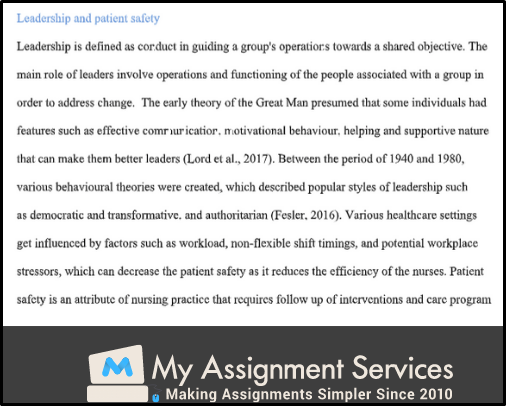
Each leadership concept is systematically connected to patient safety, ensuring alignment with academic assessment criteria.
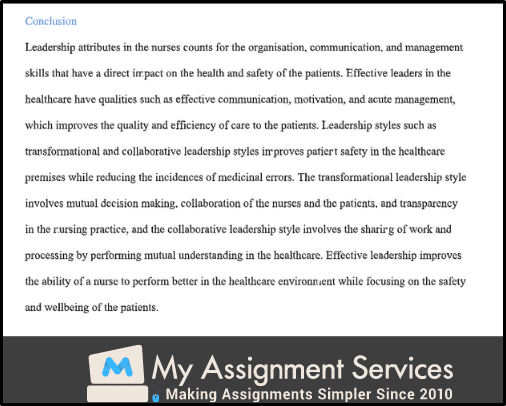
Conclusion Highlights
The conclusion reinforces the importance of effective leadership in nursing practice. Key leadership characteristics are illustrated using relevant examples, strengthening the overall critical reflection.
The sample emphasises transformational and collaborative leadership styles, demonstrating how they support patient safety and professional accountability.
How Western Sydney University Assignment Experts Support Nursing Students
Many students approach Clinical Leadership and Professional Relationships 401213 assignments while managing tight academic schedules. The complexity of nursing assessments often adds to this challenge.
Our Western Sydney University assignment experts maintain structured timelines to ensure quality outcomes within academic deadlines. This approach allows time for refinement and alignment with assessment rubrics.
My Assignment Services brings together experienced academic professionals with extensive industry exposure. Their subject knowledge enables them to support nursing students across a wide range of leadership-focused assessments.
Additional academic benefits are available for students seeking structured guidance. Reach out to explore available options and strengthen your academic performance with confidence.